
Monroe Court Docket Searches
A Monroe court docket search starts in the North Carolina eCourts Portal. The city runs no separate municipal-court docket or calendar. Smart Search works with an exact Case Number or a Citation Number. It also takes a name typed Last, First. Add the Union location filter when it appears. Case-type and status filters come into play only after a valid basic search.
Open a public result and the Portal shows a Case Summary or Register of Actions. That view can include case information, events, hearings, dispositions, and financial data, depending on the case. Monroe court records there help with public research. Yet the State is clear: the Portal is not the official court record. Need a certified copy, official verification, or a discrepancy? The Union County Clerk of Superior Court is the route.
- Open the eCourts Portal and choose Smart Search.
- Enter the exact case number, citation number, or Last, First name.
- Limit the search to Union when the location control is offered.
- Review the public Register of Actions for case and hearing information.
- Confirm a consequential Monroe setting or official record question with the clerk.
Monroe County Seat Court Files
Monroe is the county seat, home to the active Union County Judicial Center. That fact invites an easy mix-up. The courthouse sits in Monroe, but the city keeps no separate Monroe court-file system. Court files live with the Union County Clerk of Superior Court. That office handles the county's District and Superior Court records, dockets, files, and indexes under the statewide structure.
The City of Monroe lists City Hall at 300 West Crowell Street. That address is a city-government contact, not a state-court records counter. Keep a city administrative request separate from a Union court-file request. Monroe's location makes court access convenient. But the office that holds the record is the county clerk, not City Hall.
Inside the Monroe Municipal Court
The city posts no separate Monroe municipal court. North Carolina runs no independent city municipal-court or justice-of-the-peace docket system for Monroe. So the label needs a precise answer. Monroe cases in the state system go to Union County District Court or Superior Court by case type and assignment. Monroe is not a third court tier between a city agency and the county courts.
The Union County Judicial Center sits at 400 North Main Street, Monroe, NC 28112. Public hours run weekdays from 8:30 a.m. to 5:00 p.m. The general courthouse number is (704) 698-3100. The Union Clerk of Superior Court office there supports both court levels. It keeps District Court and Superior Court records. A Monroe street address does not make that clerk a municipal clerk.
Union County Clerk Route
Union County Judicial Center
400 North Main Street
Monroe,
NC 28112
(704) 698-3100
Monroe Police and Court Access
Monroe Police and the courts do very different jobs. The city's Police Department page places Monroe Police at 450 West Crowell Street. It also offers a city agency route. That works for a police administrative question. It will not yield a Monroe court docket, a calendar, or a clerk copy. A ticket or case may have begun in Monroe. Its court-side record still lives in the Union County state system.
The split matters when all you hold is an issuing-agency reference. Run the citation number or case number through eCourts. A police contact is not a court lookup. A court record can identify the case, the hearing, and any listed disposition. Agency contacts and court offices serve different roles, even though both sit in Monroe.
| Monroe contact | Appropriate task |
|---|---|
| City Hall | City administrative routing. |
| Monroe Police | Police agency contact, not a court docket. |
| eCourts Portal | Public state-court case and hearing research. |
| Union Clerk | Official copy, inspection, and record verification questions. |
Finding Monroe Court Dates
A Monroe court date is a state-court setting. That holds wherever the judicial center sits. Look up the case or citation in Smart Search first. Then turn to Portal Hearing Search, the Court Dates route, or the current Union calendar. The criminal calendar and civil calendar list county-filtered sessions. A calendar shows event or session information. The Register of Actions gives the case-level chronology.
Monroe court dates can move. The court-date source warns that weather or schedule changes may force rescheduling. A public Portal entry can lag too. Processing time, access limits, or a changed hearing may affect it. When a date decides whether someone must appear, confirm with the clerk. A city-office address is no stand-in for a current court setting.
| Date | The listed hearing date in the public case or calendar result. |
|---|---|
| Time | The time provided for the hearing or session. |
| Location | The court location field, normally narrowed to Union. |
| Hearing type | A listed category such as Civil, Criminal, Family, Probate, or Mental Health. |
| Courtroom | Hearing-location detail when the current state result provides it. |
Monroe Judicial Center Calendar
The Monroe courthouse sits in the city. City Hall has no hand in publishing court sessions. Calendars for Union County run through a statewide system that you filter by county. In the Portal Hearing Search, pick a location and a hearing type. Enter a search value and set From and To dates. For a Monroe matter, three controls help most. Use the Union location, a tight date range, and the right hearing category.
Court Dates offers a state court-date lookup. The Union civil or criminal calendar lists current sessions. If what you find does not match a notice you hold, ask the Union clerk next. The North Carolina Judicial Branch keeps calendar control even though the courthouse itself is in Monroe.
- Hearing search
- A calendar-oriented Portal tool, separate from Smart Search.
- Register of Actions
- The public case-level chronology, also called Case Summary.
- Calendar
- A court session or event list that is not the official certified record.
Monroe Traffic Ticket Lookups
A Monroe traffic ticket follows the state court path. A local officer may write the citation. But North Carolina traffic cases belong to Union County District Court, not to any separate Monroe traffic docket. Read the ticket itself for the court date, county, number, and appearance instructions. Search by Citation Number where the Portal allows it. Or use case details plus the Union criminal calendar to confirm the setting.
The state's traffic information explains online, mail, and in-person handling for eligible offenses. Eligibility depends on the specific citation. The Union payment page handles local payments. City Hall cannot take money for a state court citation. For the fuller discussion of records and court dates, see Union County Traffic Court.
Monroe Clerk Copy Questions
Need an official court copy? Bring the most exact identifier you have. A case number or citation number helps the clerk find the right county file fast. State guidance lets public users search civil and criminal records at clerk's office terminals. Searches there run by name, case number, or witness name. The office holding the local file is where inspection and copy questions go.
Tell the clerk exactly what you need. Ask for a plain copy, a certified copy, an inspection, or verification of something you saw online. The Portal is a fine first step for spotting a public case. But the clerk keeps the official record. Even with the courthouse, city offices, and police department all in Monroe, court records stay a Union clerk function.
Note: The clerk can explain record-access procedures and copy routing. But a public search result is not the same as clerk authentication.
How Monroe Cases Reach the County
Monroe cases flow into the county system through the same state-court structure. That structure serves every Union municipality. District Court ordinarily handles misdemeanors, infractions, and smaller civil actions. It also takes most family matters, juvenile matters, and magistrate matters. Felonies, larger civil claims, and specified appellate work go to Superior Court. So read a Monroe case by its court division and case display. A city address alone never makes it a city court matter.
Docket flow: Monroe city agency or police contact › Union County District Court or Superior Court › Union County Clerk of Superior Court.
For statewide search fields, result limits, and Case Summary sections that support a Monroe file lookup, use Union County Docket Search. That county docket route pairs well with Monroe's city contact information.
Monroe Court Records Context
The 2020 Census population for Monroe is 34,562. That number describes a municipality and county seat, not a court jurisdiction. Monroe hosts the Judicial Center. So the city is a physical hub for Union court work. The files, dockets, and record access, though, remain countywide functions. The clerk and the North Carolina courts control them.
Monroe Police information gives the local agency context, listing police contacts and services. It does not show a separate Monroe court docket or a payment portal.
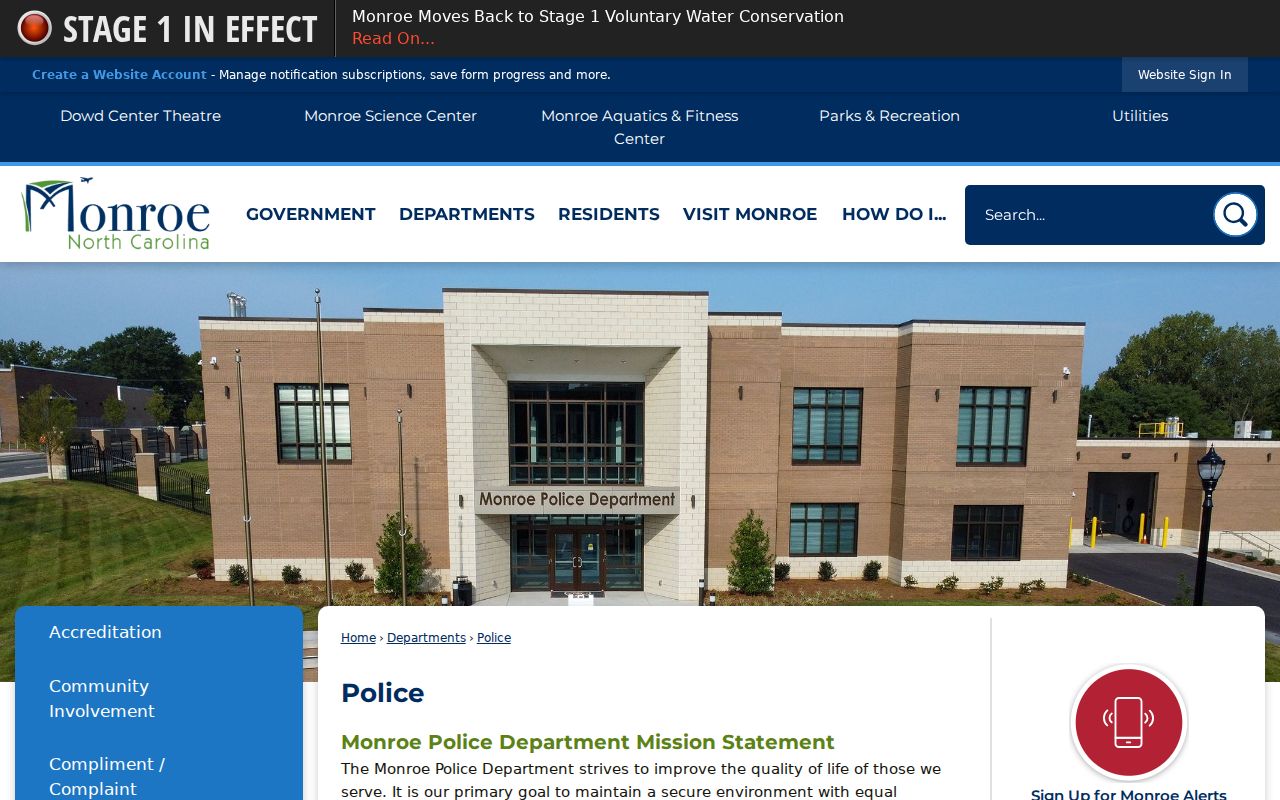
The police page reinforces the line between Monroe law-enforcement contacts and the Union clerk's state-court record role. Monroe QuickFacts adds the municipal population context.
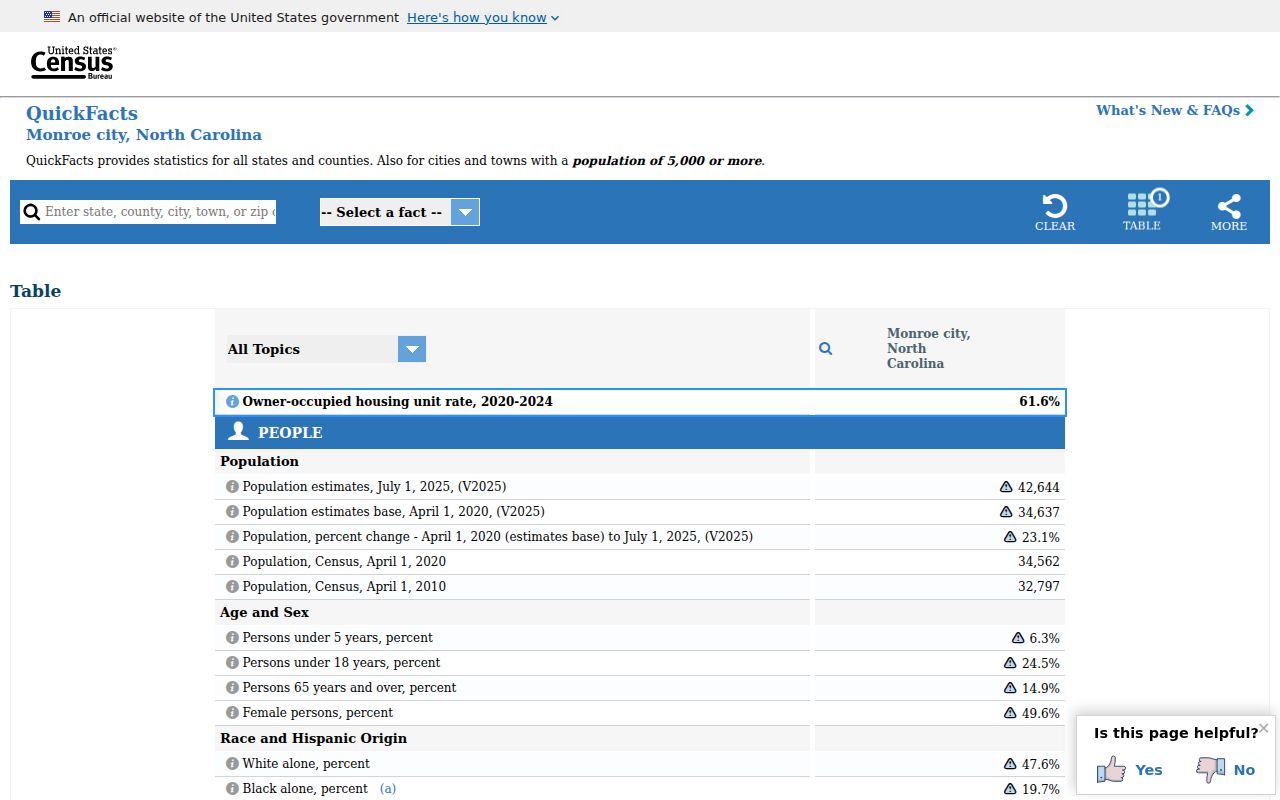
The QuickFacts data adds Monroe city context without changing where Monroe court records live.
Who Can See Monroe Court Records
Monroe holds the Judicial Center, yet Monroe court records remain county clerk records. City Hall and Monroe Police play local agency roles only. The courthouse address makes access local in place. But the Union County state court system controls the file, the calendar, and the official copy. That distinction matters whenever one event touches more than one public office.
Monroe court records follow the same North Carolina access rules as any other Union County court records. G.S. 7A-109 places court records, dockets, and indexes with the clerk. It opens them to public inspection during office hours unless law says otherwise. The Portal helps with case research. The clerk's maintained file remains the official source for certified records and anything consequential.
Not every Monroe record is visible through ordinary public access. Sealed, confidential, restricted, juvenile, protected-order-related, and expunged matters carry special limits. A missing Portal result might also mean an inaccurate field or a bad filter. The right move is a clerk or court question about lawful access. Do not conclude that an unavailable public display settles the record.
Key Rules:
G.S. 7A-109 establishes the clerk-maintained court-record and inspection rule.
G.S. 1-72.1 provides a court process for certain unavailable civil judicial records.
Chapter 132 includes public-record and redaction protections without overriding court confidentiality rules.
Monroe Court Record Limits
A Monroe Portal result is not a full stand-in for the official court file. Confidentiality, sealing, restrictions, processing delays, and sheer volume can all shape what the public sees in an entry. The State's Portal FAQ lays this out. It also describes three account tiers: public, registered, and role-based elevated access. Registering does not bypass confidentiality. Even elevated access will not convert sealed or protected records into ordinary public records for a Monroe court record search.
When a Monroe court record seems missing, check the basics first. Confirm the case number, the citation number, the name order, and the Union County location you searched. If the answer matters for an appearance, an official copy, or a correction-sensitive issue, go to the Union clerk instead. That office holds the actual record. It can fix problems that a city source simply cannot.