
Union County Civil Docket Searches
One public route into a Union County civil docket is the North Carolina eCourts Portal. Its Smart Search works from an exact case number. Or type a party name as Last, First. Click a matching case number and the Register of Actions opens. The Portal also calls this Case Summary. Keep the boundary in mind. The display is a research aid. The official court record sits with the Union County Clerk of Superior Court.
Broad searches get narrower through the advanced controls for location, case type, and case status. A name search can come back empty for simple reasons. The cause may be a misspelling, a filter left on, an interface limit, or an access restriction. Queries hitting the 200-result cap should be refined with known fields rather than treated as the full list of Union civil cases.
- Open the public Portal and choose Smart Search.
- Use the exact case number if a court document provides it, or enter the party name as Last, First.
- Set Location to Union where available and add an accurate civil category only if needed.
- Open the matching result and read the Register of Actions, hearings, and disposition fields that appear.
- Ask the clerk for inspection, copies, certification, or a record-specific access answer.
Union Civil Docket Case Summary Search
Smart Search and electronic filing are two different doors. A Union County civil docket search runs through the public Portal, while North Carolina eCourts File & Serve is the state e-filing service for eligible cases. Guide & File is a third, separate tool that walks filers through guided forms. None of this turns a docket lookup into a copy request. The official File & Serve page shows what the filing service covers.
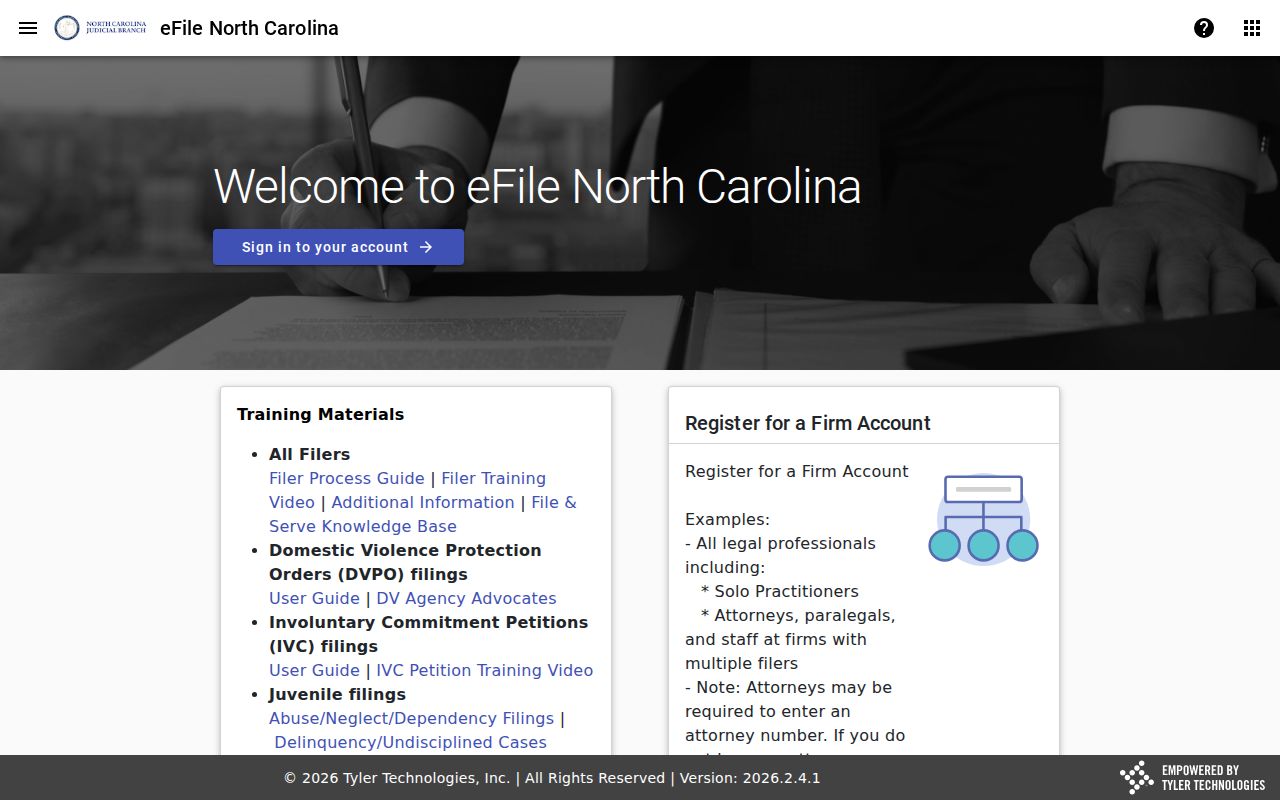
One boundary matters here. A filing workflow and a public Union County civil Register of Actions search are separate tools. A service screen can make them look alike, so keep the distinction in mind.
The portal does offer anonymous use for Union County case lookup. With an account, you can add My Cases. A role-based request for elevated access is sometimes possible. No login gives you a way past a seal, a confidentiality rule, or any other court restriction. Those limits hold no matter which door you use.
Civil Dockets: What They Show
A Union County civil Register of Actions is a case-level display. The Portal guide lays out several sections where data exist. These include Case Summary, Case Information, Assignment Information, Party Information, Case Events, Dispositions, Hearings, and Financial information. Civil, family, probate, and mental-health matters can add a cause-of-action section. No field is guaranteed in every case.
Begin with the case identifier, the location, and the case type. Then follow the dated events and hearings to trace the public procedural sequence. A docket entry can lag behind processing. So a missing event or document does not prove the official clerk file lacks it. Questions needing a certified document, a correction-sensitive answer, or record inspection go to the clerk.
| Case information | Identifies the court file, location, case type, and other case-level context where present. |
|---|---|
| Cause of action | A civil, family, probate, or mental-health category field that may appear in an applicable matter. |
| Case events | Dated public procedural entries in the Register of Actions. |
| Hearings | Scheduled or recorded hearing data where the case has it, distinct from a full calendar session list. |
| Disposition and financial | Displayed outcome and financial sections where available. A judgment display is not a current payoff calculator. |
Union Civil Docket Categories
Let the live case label drive Union County civil docket research. The Portal sorts cases into Civil General and Civil Magistrate, alongside categories for civil foreclosure, bond forfeiture, confession judgment, non-domestic restraining orders, and summary ejectment. Estates, guardianships, and special proceedings sit in their own categories and can pull in the clerk's distinct statutory functions.
| Category or record group | Why the label matters | Union route |
|---|---|---|
| Civil General | One Portal civil category, not a description of every claim. | Read the live ROA and clerk record as needed. |
| Civil Magistrate | Separate from Civil General in the state taxonomy. | Identify the assigned court layer from the live record. |
| Foreclosure, bond forfeiture, confession judgment, restraining order, summary ejectment | Each is separately named in the Portal taxonomy. | Do not infer facts, access, or an outcome from the broad label. |
| Estate or special proceeding | May use clerk-centered procedures and categories. | Use the Portal where public, then seek clerk direction for the specific record. |
A category label helps you locate a Union County record. It says nothing about a party's position, a filing's result, or whether the record is public.
What Cases Fill the Civil Docket
Union County runs on a unified state trial-court structure with one Clerk of Superior Court office. Division still matters when reading a civil docket. District Court generally covers civil actions at or below $25,000 plus family, juvenile, and magistrate matters. Superior Court generally takes civil actions over $25,000. The clerk carries statutory duties in estates and special proceedings.
None of this splits Union County into separate civil clerks or separate public database brands. Read the court assignment stated in the record. Do not guess from a label, a city, or a dollar amount. Some matters also carry clerk-centered records needing their own access direction. The Civil Overall Caseload Activity Report is the official source for aggregate civil activity.
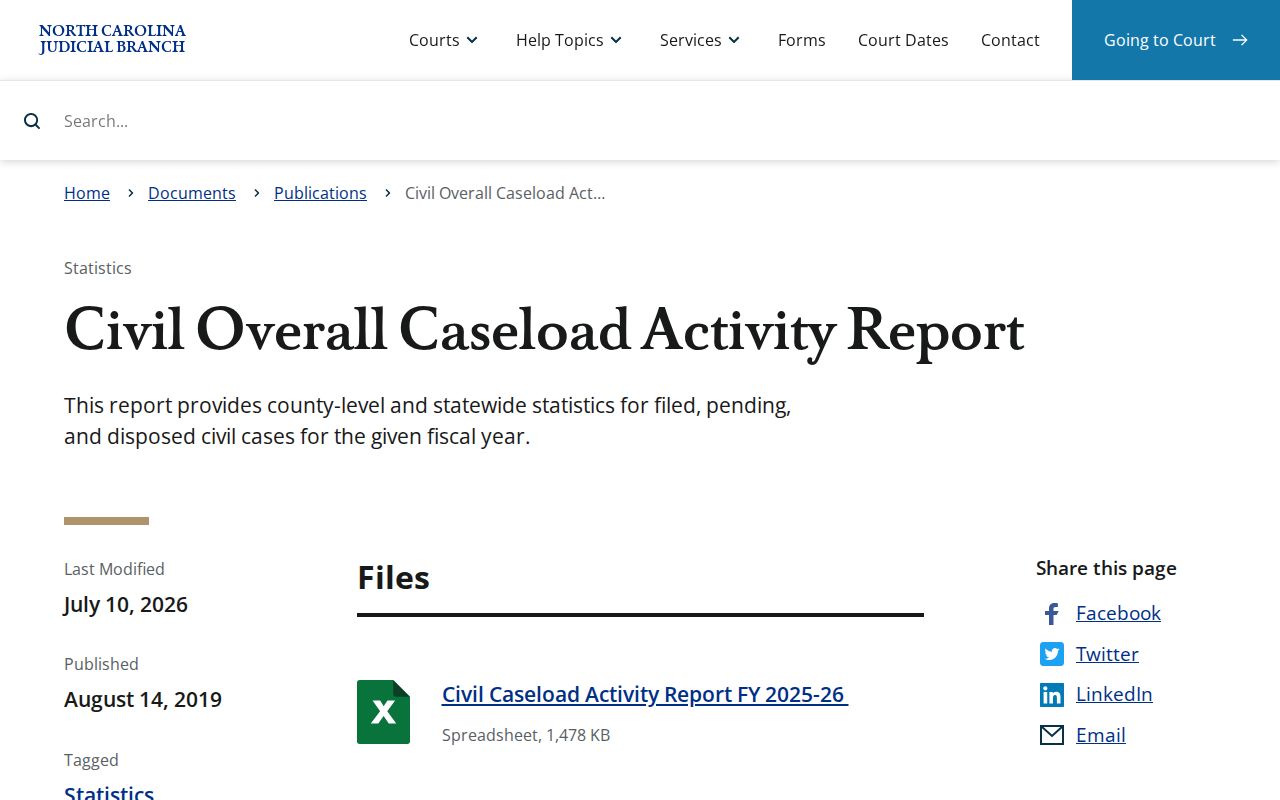
That report gives Union County context in the aggregate. It cannot tell you what happened in any particular Union civil case.
Union Civil Calendar Sessions
The official Union civil calendar is prefiltered to Union and Civil. It is a session-oriented listing, not the full Register of Actions. Select the desired date or session in the live calendar, then compare it with the case’s hearing information and the clerk’s answer if a time or setting matters.
The Union civil calendar is the source represented in this image.
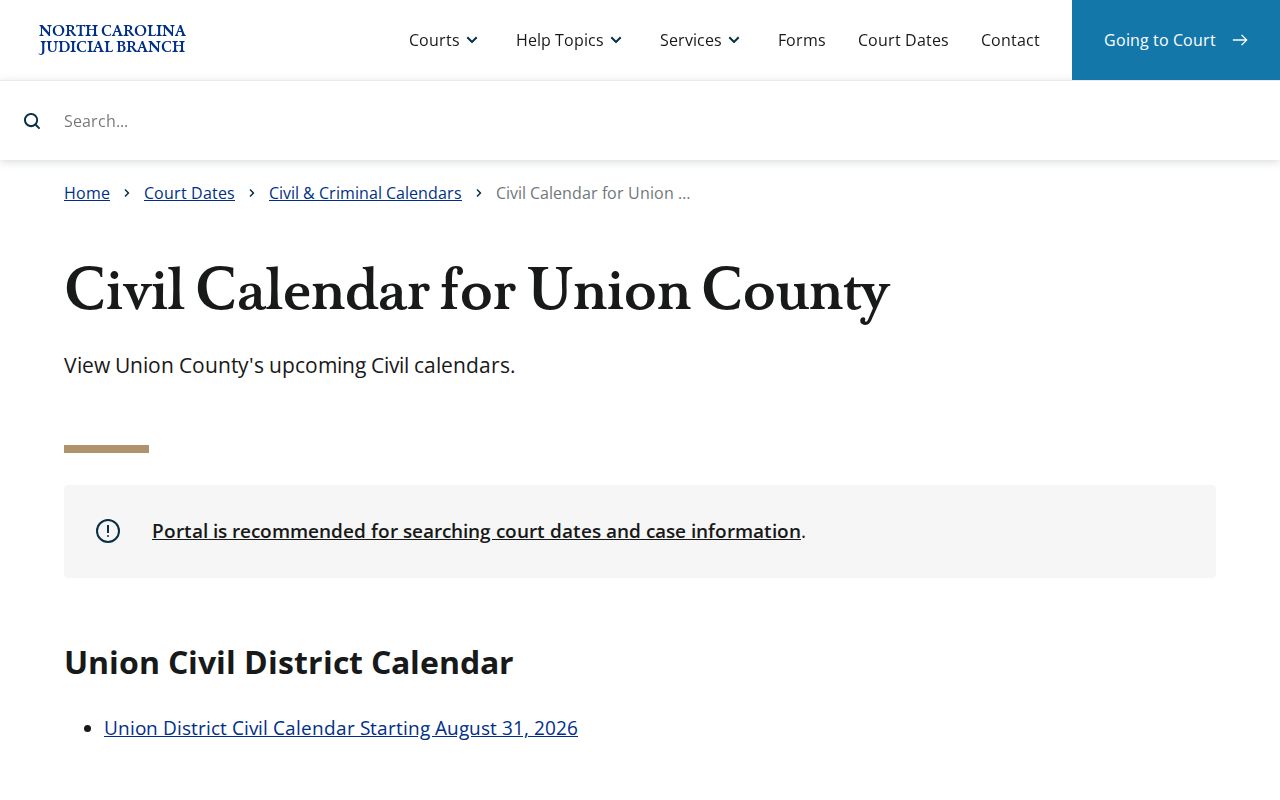
The live Union County session view works well for a current date check. Treat it as a snapshot, not a permanent civil case history to copy forward.
Portal Hearing Search offers another date-oriented route for Union County. Its documented filters cover Location, Hearing Type, Search Type, and From and To dates. Civil counts as one hearing type. The search type chosen shapes the query. Depending on it, the live interface can query by a case number, party, business, attorney, judicial officer, or courtroom.
Hearings on the Civil Docket
On a Union County civil docket, a hearing belongs to one case. A calendar is different, since it gathers many sessions across a span of time. This matters most when the ROA entry you read does not match the session list for that day. Which source wins? Work from the top down. The clerk's live confirmation of the official file comes first. Then check the current calendar or Portal display. Only after that, rely on any older copied publication.
- Setting
- A scheduled court event. It may change and should be verified through current court sources.
- Continuance
- A court-approved move or delay of an event. The current record and calendar should be checked for the replacement setting.
- Disposition
- A recorded decision or outcome entry where one appears. It is not the same thing as a future hearing.
- Judgment Search
- A separate Portal function with type, status, location, and judgment-date filters, not a current-payoff tool.
Weather in Union County can shuffle the schedule at the last minute. When a hearing date looks doubtful, the state Court Dates resource points you back to the clerk for a firm answer.
Union Civil Docket Local Rules
The Union County local rules and forms index is the official local source for procedural materials. Its resources include a Civil Superior Calendar Notice and other county documents. The index should be checked in its live form rather than reduced to a claimed permanent calendar practice, because the research did not identify a standard Union civil hearing schedule or a named civil coordinator.
The Union local rules index is shown in this source image.
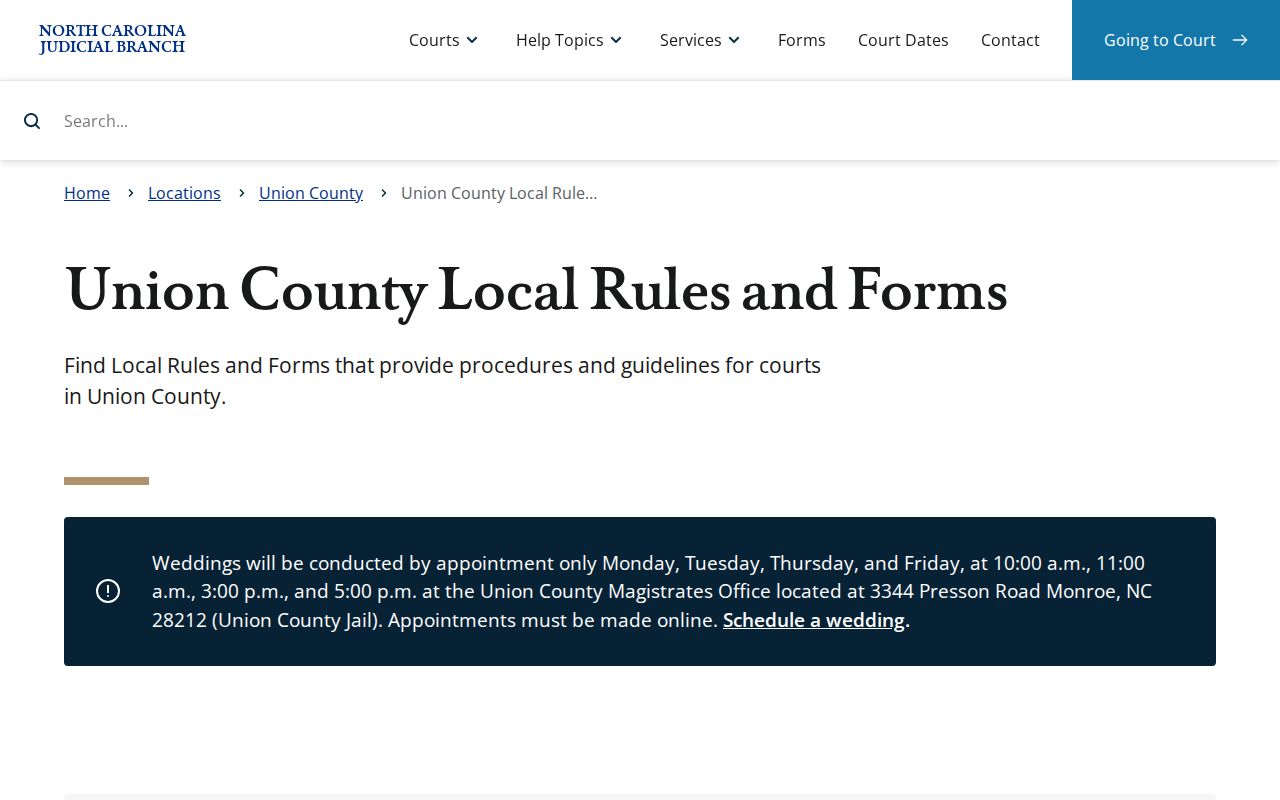
A copied notice or a guessed-at civil setting routine goes stale fast. For current local materials, the Union County index is the better route every time.
Who Can See Civil Dockets
G.S. 7A-109 puts the clerk at the center of public access. The clerk keeps the files, records, dockets, and indexes. Anyone may inspect them during office hours, unless a law says otherwise. That promise has limits, though. The statute does not entitle you to every civil item through the Portal, and some records carry lawful restrictions you cannot inspect around.
Restricted records. The Portal’s ordinary public access does not show sealed, confidential, or restricted records. Juvenile material and protected-order-related items can have special limits.
A failed Portal search can reflect an accurate filter, a limitation, a seal, or an interface issue. It is not proof that no record exists.
For an unavailable Union County civil judicial record, use the lawful clerk or court route rather than attempting to bypass the restriction.
Union Civil Docket Access Requests
Civil records that sit outside normal access can still have a route. G.S. 1-72.1 lets a person ask the court, by motion, to release a civil judicial record. That record must be otherwise unavailable. The section spells out its own hearing and order procedures. Juvenile proceedings are left out entirely. Nothing in it forces disclosure. So a call to the Union County clerk of court for procedural direction is the practical first step.
The statute page sets out the full motion procedure.
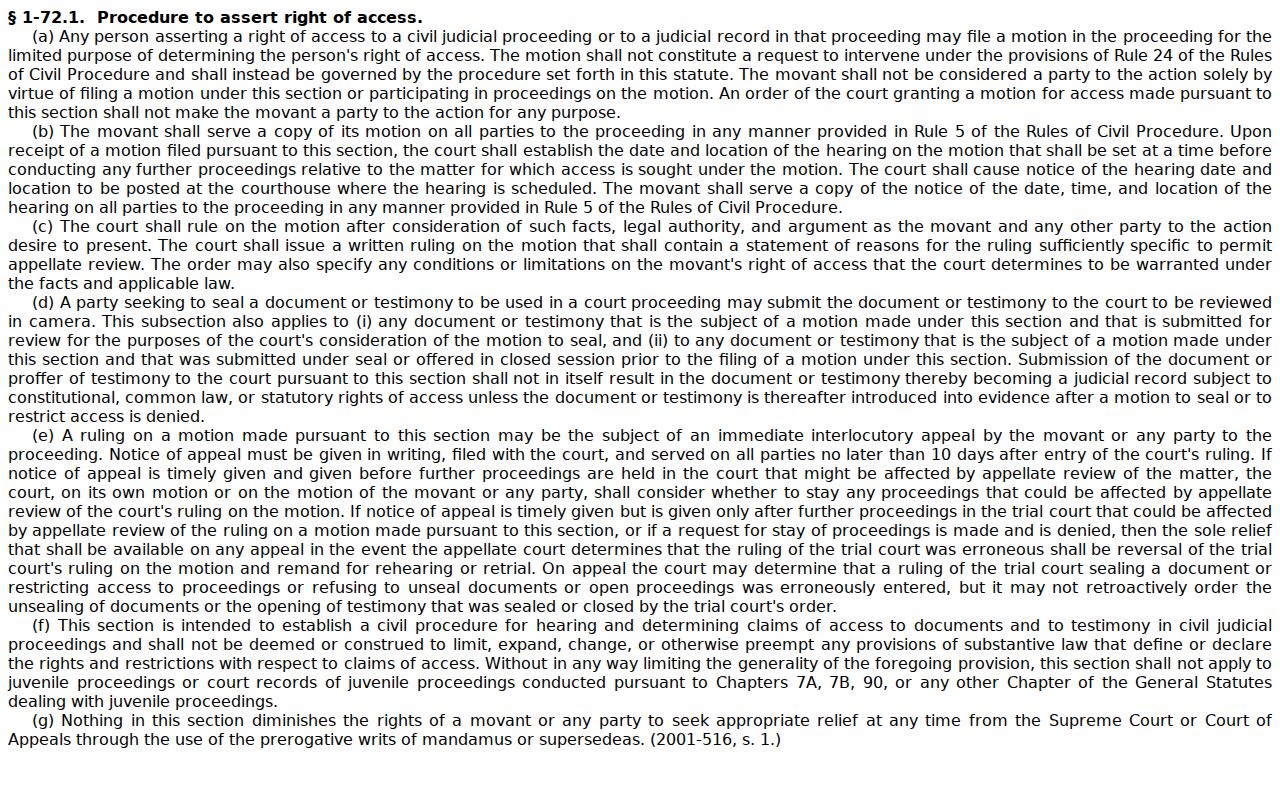
A Union County civil record can require a court process. A restricted display does not create an informal right of access. That is the narrow point the statute supports.
North Carolina's public-record framework builds in protections of its own. It requires redaction of certain identifiers and financial information. Those rules do not override a court seal. They do not override a confidentiality rule or any other lawful limit on a Union County court-file access request. So describe the public court record you want without restating sensitive details. Whether your Portal account is public, registered, or elevated, the limits still hold.
For inspection, copies, certification, or access questions about a specific record, go through the Union County Clerk of Superior Court at the Union County Judicial Center, 400 North Main Street, Monroe, NC 28112. Weekday public hours run 8:30 a.m. to 5:00 p.m. The main line is 704-698-3100.