
Union County Court Record Requests
Start with the case. Know the file, the parties, or at least enough detail to point staff to it. The Union County Clerk of Superior Court holds the local dockets, indexes, and files for both District and Superior Court work. A Portal result can help you spot the right case number. It is not an official record. So bring your question to the clerk. Ask there when you need inspection, a copy, certification, or an answer to a Portal discrepancy.
- Use known case information to identify the record and its court context.
- Check the public Portal when a public case, hearing, or judgment search can help.
- Choose the clerk counter, terminal, phone route, or clerk-directed mail process for the item needed.
- State whether a plain copy, certification, or exemplification is required.
- Confirm the requested item total with the Union clerk before payment or follow-up.
Statewide instructions tell people to ask the clerk who holds a record for copies. The same guidance is clear. A county with a paper file or record clip is where you inspect that local file. That rule matters. Sending a Union County case-file request to a general administrative office just slows you down.
Union County Court Record Access Routes
Different channels answer different questions. The public eCourts Portal fits research into cases, hearings, judgments, and eligible payments. Need a machine instead? A courthouse terminal or eCourts kiosk gives on-site digital access. The clerk counter is the route. Use it for an official file, an inspection question, a copy, certification, or anything missing from the online results. The main clerk and courthouse number is (704) 698-3100.
The Union County Judicial Center sits at 400 North Main Street, Monroe, NC 28112. Judicial Branch hours run weekdays from 8:30 a.m. to 5:00 p.m. Staff at the clerk's counter can route a records question. They cannot give legal strategy. Nor can they informally change a court order.
The State's court-records instructions lay out the clerk, courthouse-terminal, copy, and recording routes in full.
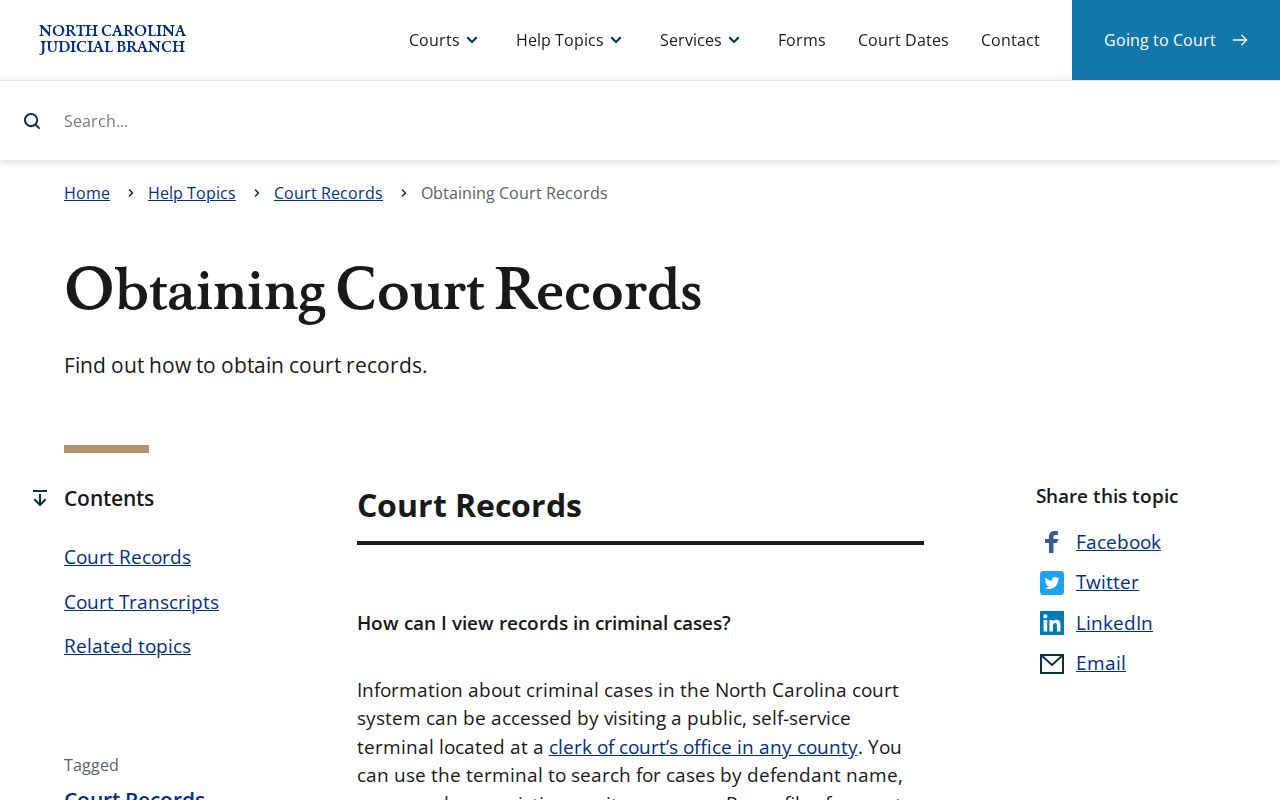
The state guidance supports a layered approach. Research online first, then turn to the Union clerk for the local file or an official copy.
Union County Court Record Kiosk Access
Here is the North Carolina guidance. Court terminals in a clerk's office can search criminal and civil records by name, case number, or witness name. Union County also received public eCourts kiosks in June 2025. Those kiosks offer Portal access, e-filing links, payment services, scanners, and printers. No published kiosk floor or internal location exists, so plan ahead.
Call before you travel. Ask where the public terminal or kiosk sits. On-site access does not override any restriction on a record. It simply gives you another way in. It reaches the same public court-access infrastructure when a personal device will not do.
Kinds of Court Records
The clerk's files span many case types, not just one. Under G.S. 7A-109, that structure includes civil actions, special proceedings, estates, criminal actions, juvenile proceedings, court minutes, judgments, and liens. Access still turns on several things. These include the record type, the law, any court order, and confidentiality status.
- Public case-level Register of Actions or Case Summary information.
- Civil and criminal court files held by the local clerk.
- Judgments, liens, court minutes, estates, and special-proceeding records.
- Audio-recording requests where an appropriate court-recording route applies.
- Certified copies or exemplifications when the clerk confirms they are available.
District and Superior Court share one clerk. There is no separate county clerk office for each division. The single Union County Clerk of Superior Court handles the county's court record functions, while the live case display shows the actual division and location.
Union County Court Record Clerk Authority
G.S. 7A-109 sets the clerk-centered model. The clerk must keep court records, files, dockets, and indexes, and must open them for public inspection during office hours unless another law or lawful restriction applies. That rule also explains why an online result and an official file play different roles.
Superior Court generally takes felony matters, civil actions over $25,000, and appeals from District Court in criminal and infraction cases. District Court handles the rest. It generally covers misdemeanors, infractions, family matters, smaller civil actions, juvenile matters, and magistrate matters. The division shapes how you read a case. It does not create a second Union records custodian.
The General Assembly source publishes the statutory record-access material in full.
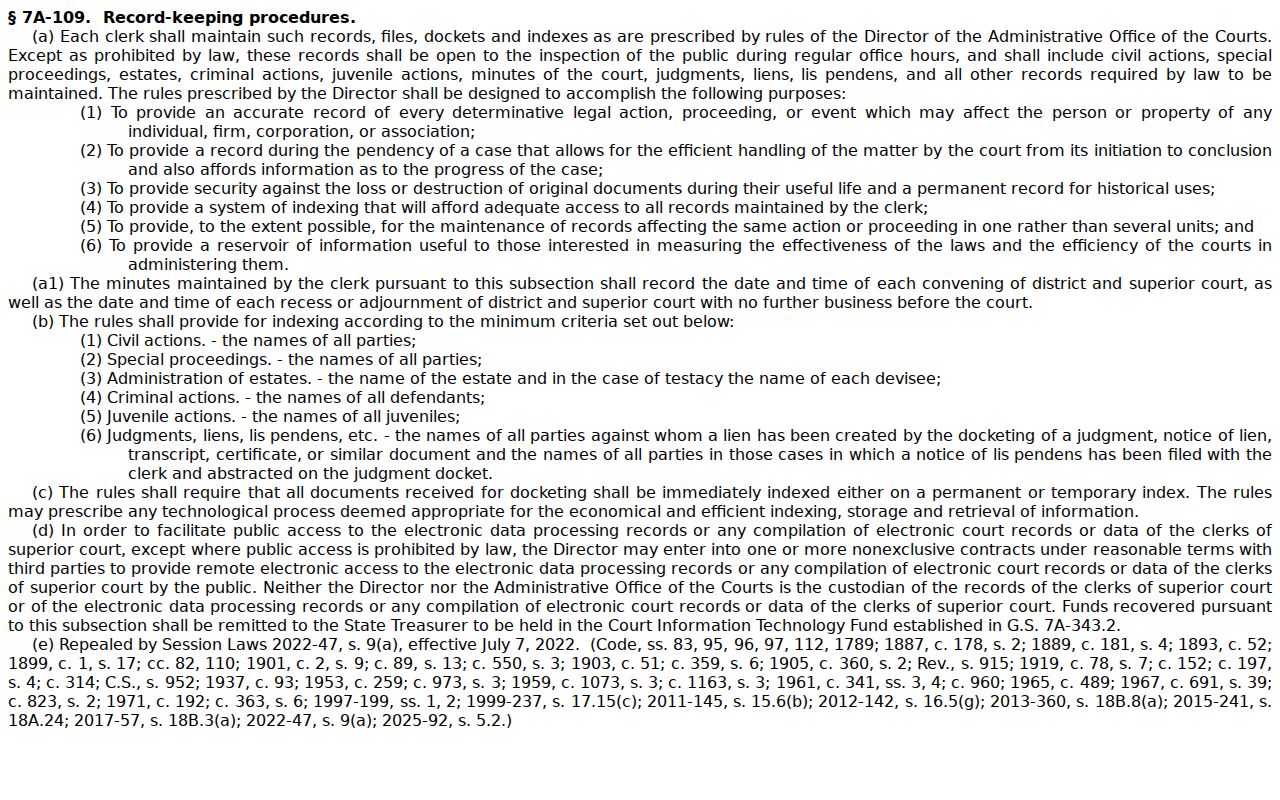
Public inspection has a legal boundary. It does not put every court document online or make each one available without restriction.
Union County Court Record AOC Boundary
The Administrative Office of the Courts offers a public-records request form, but only for administrative records it holds. That form is no substitute for a county case-file request. AOC states plainly that it is not the custodian of actual case documents. For an underlying Union case file, start with the Union County Clerk of Superior Court.
The AOC public-records request form collects requester contact information and a description of the record. Its fields suit an administrative request. They do not move a local court file into AOC's hands.
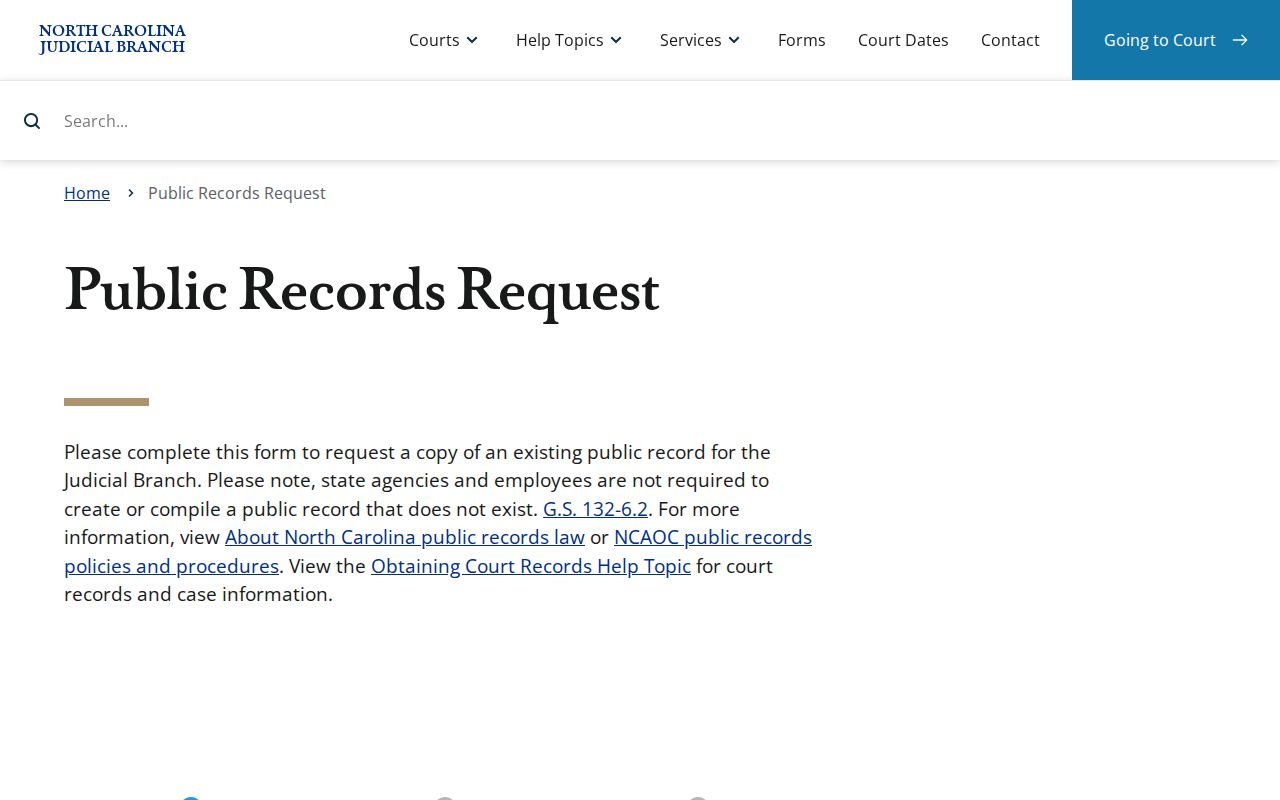
Keeping the custodian distinction clear saves misdirected requests and helps you describe the right record to the clerk. The Judicial Branch also posts a general request-a-public-record service page.
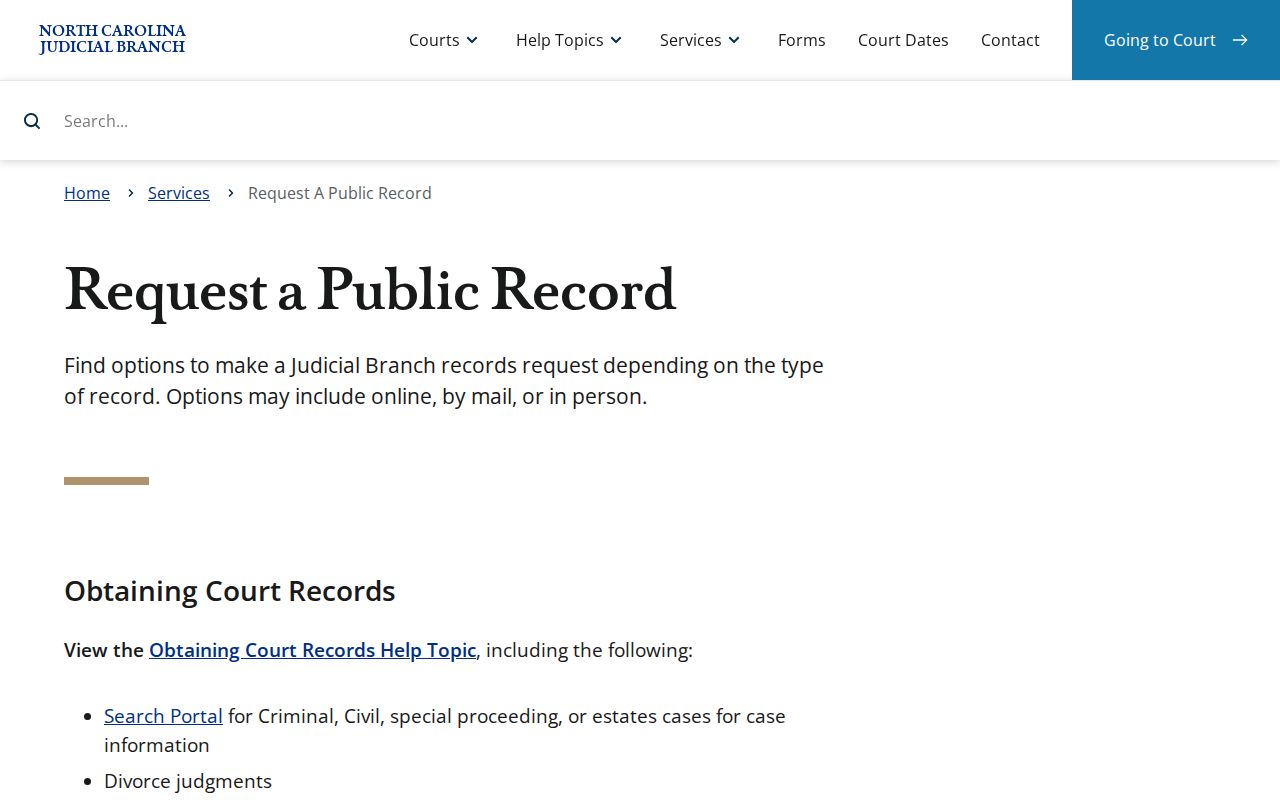
That service page helps you pick the right public-record route. For Union court records, the clerk remains the case-file contact.
Court Records: What They Contain
A public Case Summary or Register of Actions can display case information and assignment information. Party information, case events, dispositions, hearings, and Financial information may appear when they exist. Civil, family, probate, and mental-health matters may also list causes of action. A blank field proves nothing. The fact may still exist in the file. The display simply does not show it.
| Case Information | File and court or location context shown in the public display. |
|---|---|
| Assignment and Parties | Section headings for assignment-related and party-related information where present. |
| Events and Hearings | Public procedural entries and scheduled or recorded hearing information. |
| Dispositions | Recorded outcome or status entries when entered in the case. |
| Financial | Case financial section where data exist, not a current payoff promise. |
What you order from the clerk is the file's actual contents, not the labels the Portal happens to display. Those headings only hint at what exists. Ask the Union County clerk which items can be produced and how each one gets authenticated.
Union County Court Record Copy Choices
Copies come in three grades. A plain copy is just paper. A certificate under seal carries the clerk's verification. An exemplification goes further still, since it backs the certifying officer's own authority. Pick the version that fits your purpose. Let the clerk confirm the item is one they can actually certify. Portal entries are helpful for a Union County court records search. They are not an authenticated substitute for what the clerk files. Name the document first, then ask for the total. The current court-cost publication index publishes the statewide fee schedule that governs these requests.
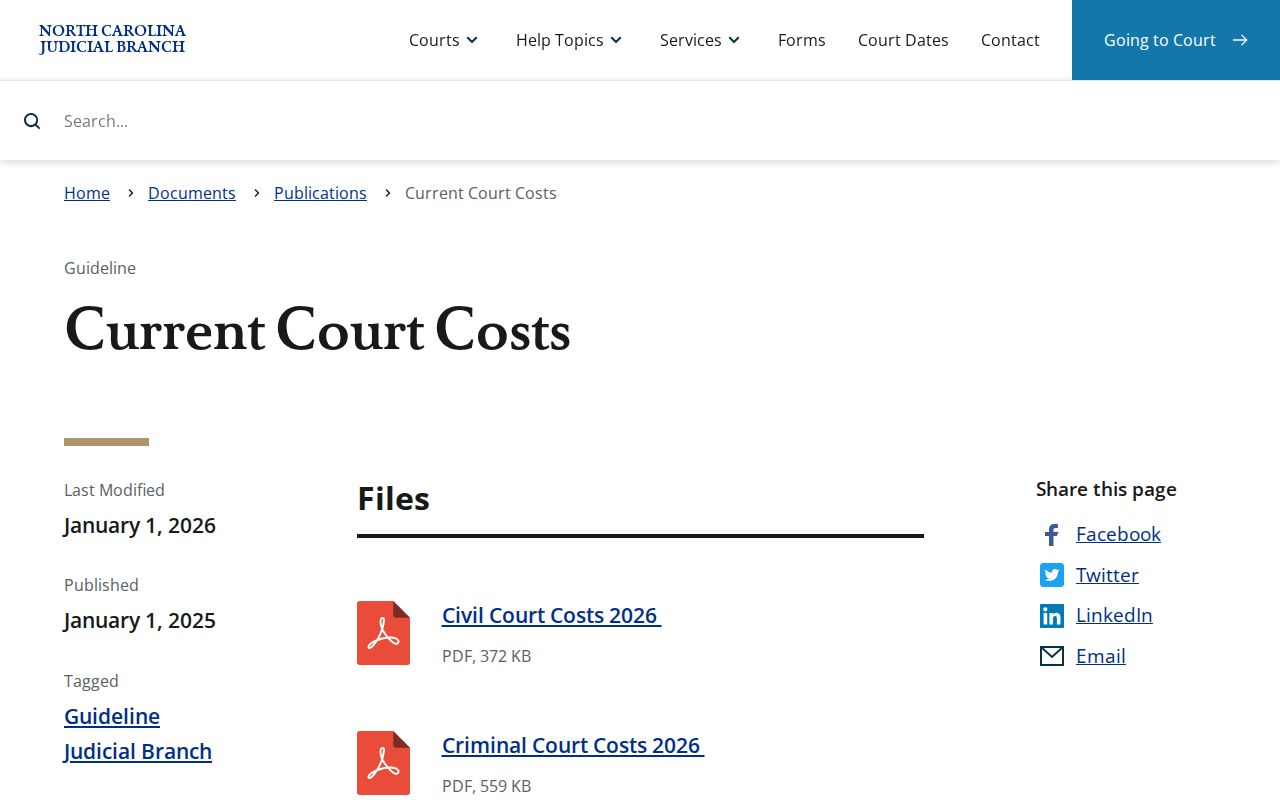
Treat that index as a reference point only. The Union County clerk computes the real total once the record and the service are known.
Copy Fees and Certification
The fee math is statutory. G.S. 7A-308 sets copies at $2 for the first page and 25 cents for each additional page. A certificate under seal adds $3. An exemplification runs $10. None of that is an all-inclusive quote. Extra documents, postage, certification, or a special service can move the total, so confirm it with the clerk.
| Item under G.S. 7A-308 | Listed amount | Request note |
|---|---|---|
| First page of each document | $2.00 | Confirm each requested document with the clerk. |
| Additional page | $0.25 | Applies after the first page of that document. |
| Certificate under seal | $3.00 | Ask whether the requested item needs certification. |
| Exemplification | $10.00 | Confirm availability and total with the Union clerk. |
The statutory fee page is available from G.S. 7A-308.
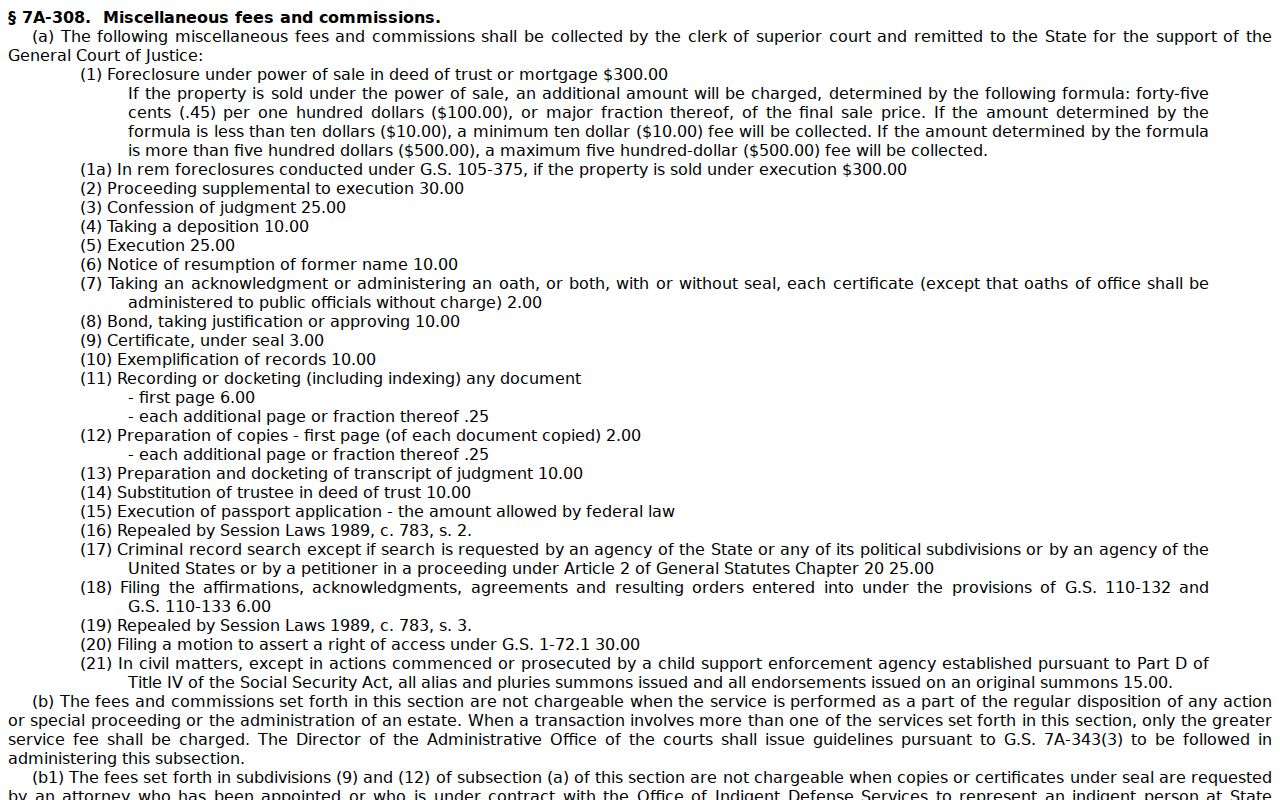
The statute sets the copy fees and certification charges that the Union County clerk applies to a docket request. For a firm total, ask the clerk, since the exact items and services you request drive the final cost.
Union County Clerk of Superior Court
Union County Judicial Center
400 North Main Street
Monroe, NC 28112
(704) 698-3100
Union County Court Record Redaction Rules
Redaction has its own rulebook. North Carolina's Chapter 132 shields sensitive identifiers and financial information in court records, and it lets you seek redaction by mail, fax, electronic means, or in person. Separate court rules on confidentiality and sealing still apply, so Chapter 132 never overrides those limits. Be careful how you frame a request. Identify the Union County record without restating private data. Portal labels for party and financial details are not license to copy addresses, identifiers, or balances from a live case.
Access Rules for Court Records
Public inspection is the default under G.S. 7A-109, open during office hours within whatever restrictions apply. Not everything shows up, though. The Portal FAQ flags sealed, confidential, and restricted records that ordinary public access will not reach, including juvenile records, unreturned criminal warrants, and protected-order material. Sealed or expunged matters stay out of the Portal entirely.
Key North Carolina rules:
G.S. 7A-109 requires the clerk to keep court records and permits public inspection unless law provides otherwise.
G.S. 1-72.1 provides a court-motion route for eligible unavailable civil judicial records and excludes juvenile proceedings.
Chapter 132 includes redaction protections for specified sensitive information.
G.S. 7A-308 lists clerk copy, certificate, and exemplification fees.
Blocked from a court record? Ask the clerk about the lawful access route. The Portal is not the official court record. A public search result there settles nothing when you need an authenticated document.
Union County Court Record Civil Limits
Civil records carry a back door. G.S. 1-72.1 lets a member of the public move for access when a civil judicial record is not open to inspection. Juvenile proceedings are excluded, and filing the motion does not automatically open anything. It simply starts a court process that can grant access. The first move is modest. Ask the Union County clerk whether the item is restricted and which process applies. That keeps a public-records inquiry distinct from a court's own decision on access.